What the calculator estimates
The calculator adds eave, rake, and valley lengths into a net edge run, then divides by effective piece length to estimate pieces, applying overlap and waste.
Free roof edge and flashing estimator
Estimate gutter apron and drip edge linear feet, 10-foot pieces, overlap, waste, and material cost for eaves, rakes, and valleys. Adjust profile, gauge, and pricing for your supplier.
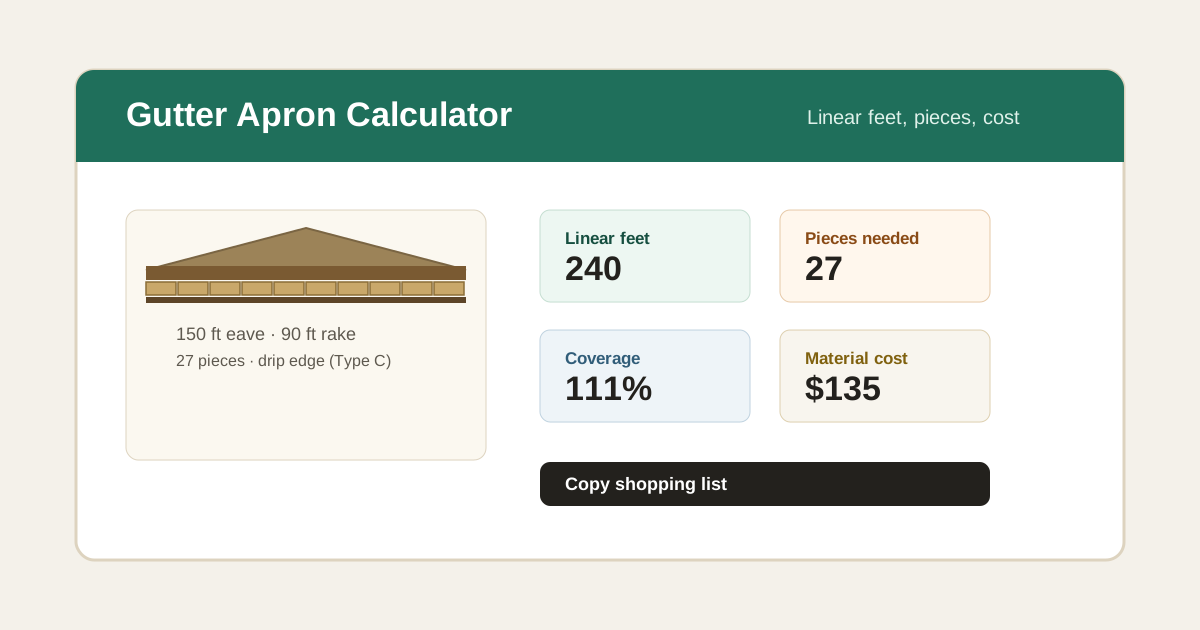
Enter eave and rake lengths, choose a profile, and the calculator works out linear feet, 10-foot pieces with overlap, and material cost. Real coverage changes with corners, valleys, and installer, so use this as a planning estimate.
Enter total eave and rake lengths. For complex roofs, add valley lengths separately.
Piece length is the stock coil or pre-cut length. Overlap is lost at each joint.
The calculator adds eave, rake, and valley lengths into a net edge run, then divides by effective piece length to estimate pieces, applying overlap and waste.
Drip edge (Type C or D) protects the roof deck edge. A gutter apron is a wider flashing that extends behind the gutter. Building codes often require drip edge at the eaves and rakes.
Real coverage changes with roof pitch, fascia size, corners, and installer. Confirm gauge, finish, stock length, and bundle quantity with your supplier.
Add the total eave length, both rake lengths, and any valley length. Most building codes call for drip edge along the eaves and rakes, and you add about 10 percent for waste, overlap, and cuts. This calculator automates that total and divides it into stock pieces.
Drip edge is an L-shaped flashing nailed along the roof edge to direct water away from the fascia. A gutter apron is a wider profile that tucks behind the gutter so water cannot run behind it. Both are estimated the same way by total edge length.
A 1 to 2 inch overlap per joint is common so water sheds over the seam. Shorter stock pieces create more joints and more overlap loss, which is why this calculator subtracts overlap before counting pieces.
Most modern codes require drip edge on both eaves and rakes for asphalt shingle roofs. The rake pieces run up the sloped edge, so include both rake lengths in your total run.
A 10 percent waste factor covers cuts, corners, damaged pieces, and starter waste. Roofs with many hips, valleys, or dormers may need 15 percent, and simple rectangular roofs may need less.
No. It is a planning estimate. Prices, gauge, finish, fasteners, underlayment, labor, delivery, taxes, and code requirements vary by supplier, product, roof, and location.