120 ft wood privacy fence
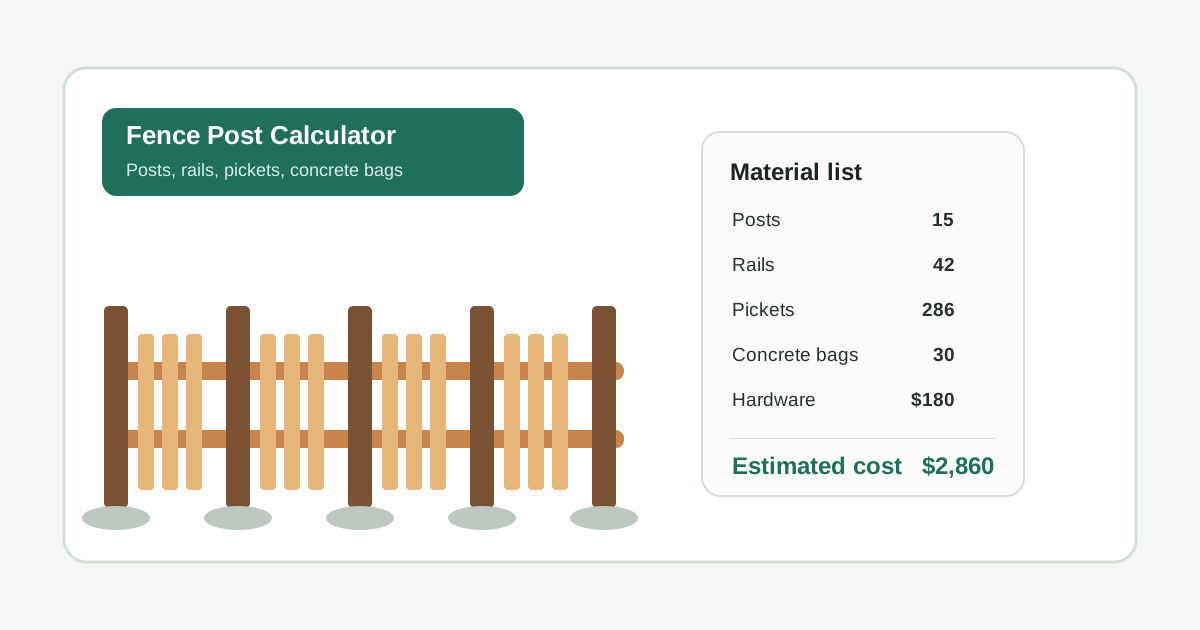
With 8 ft post spacing, a small gate, and 3 rails per section, expect roughly 16 posts, 45 rails, and a few hundred pickets before waste.
Fence material takeoff
Estimate fence posts, sections, rails, pickets, panels, concrete bags, hardware, and material cost before you buy supplies or compare installer quotes.
Use these examples to sanity-check your estimate before heading to the store or asking a fence installer for a bid.
With 8 ft post spacing, a small gate, and 3 rails per section, expect roughly 16 posts, 45 rails, and a few hundred pickets before waste.
Panel fences depend on the exact panel width. The calculator treats each panel as a section and adds posts at section ends.
For acreage or simple boundary runs, the key outputs are posts, rails, concrete bags, and hardware rather than pickets.
The calculator converts the fence run to feet, subtracts gate openings for board or panel material, rounds up sections, and adds allowances for posts, waste, and concrete.
Sections are rounded up because a partial section still needs support.
sections = ceil(run length / post spacing)
posts = sections + 1 + selected allowances
Wood pickets use board width plus gap. Panel fences use the selected panel width.
pickets = ceil(net run inches / (picket width + gap))
panels = ceil(net run length / panel width)
Rails depend on the number of sections and rails per section. Tall privacy fences often use 3 rails.
rails = sections x rails per section
Concrete volume uses a cylinder estimate for each post hole, then converts cubic feet to 80 lb bags.
bags = ceil(posts x hole volume / 0.6)
If you ask installers for quotes, give each contractor the same scope. That makes bids easier to compare.
Total linear feet, fence height, gates, corners, slope, access width, old fence removal, trees, utilities, and property line questions.
Fence type, post size, rail count, picket or panel style, stain or finish, concrete, post caps, fasteners, and gate hardware.
Permit, HOA, pool barrier rules, easements, setbacks, utility marking, frost depth, wind exposure, and inspection requirements.
Gates often need stronger posts and hardware than a normal line post. Add allowance before buying materials.
Stepped or racked fences can change post placement, panel layout, and waste. Measure the actual run, not just a flat map.
Boards split, cuts happen, and layouts change. A 5% to 15% waste factor is safer than buying the exact computed amount.
Divide the fence run by the spacing, round up to full sections, and add one post for the end of the run. Add corner and gate posts when needed.
Many wood fences use 6 to 8 ft spacing. Chain link, vinyl panels, wind exposure, height, soil, and local code can change the spacing.
That depends on hole diameter and depth. This calculator uses a cylinder estimate and converts it to 80 lb bags with a planning allowance.
Yes for pickets, panels, and rails across the run. You may still need additional posts, hinges, latches, and reinforced hardware around the gate.
Yes as a planning estimate. Product-specific panel widths, line posts, terminal posts, mesh rolls, and hardware kits should be confirmed with the supplier.
No. It is a planning tool only. A local professional should verify property lines, permits, utilities, post depth, frost line, and site conditions.