What the calculator estimates
The calculator converts surface dimensions into net square footage, then divides by exposed face to estimate board count and linear feet before applying waste.
Free wall and ceiling board estimator
Estimate shiplap boards, linear feet, square footage, waste, and material cost for accent walls, ceilings, and full rooms. Adjust board width, overlap, and pricing for your supplier.
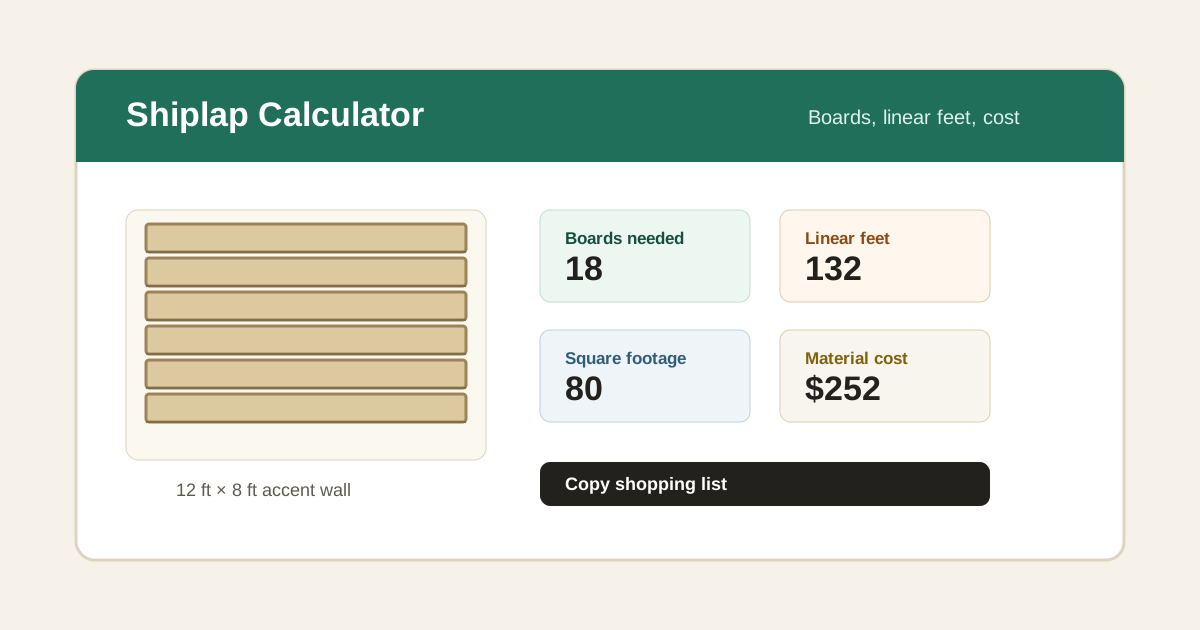
Enter wall or ceiling dimensions, choose a board size, and compare board counts with linear feet. Coverage changes with overlap and board profile, so use this as a planning estimate and confirm with your supplier.
For rooms with several walls, add each wall separately or combine the total length.
Exposure is the visible face after overlap. A nickel-gap profile hides roughly 1/8 inch between boards.
The calculator converts surface dimensions into net square footage, then divides by exposed face to estimate board count and linear feet before applying waste.
1x6 shiplap shows roughly 5 inches exposed, 1x8 shows about 7 inches, and nickel-gap planks often show 5.5 inches. Always confirm the true exposure for your product.
Real coverage changes with board profile, overlap, stud spacing, corners, and installer. Confirm board exposure, lengths, and bundle quantities with your supplier.
Multiply wall length by height for square footage, then divide by the board's exposed face in feet. Add a 10 to 15 percent waste factor for cuts, corners, and offcuts. This calculator automates that math for any board width.
Shiplap boards overlap directly with an rabbet cut, while nickel-gap planks use a spacer to leave a consistent 1/8 inch reveal between boards. Both are installed horizontally and estimated the same way by exposed face.
Yes. Subtract the area of openings to avoid over-ordering, but keep some waste factor because boards still need to be cut and fitted around frames. Enter the number of openings and an average size to deduct them here.
A 10 percent waste factor is common for straight rectangular walls. Use 15 to 20 percent for walls with many corners, outlets, or angled ceilings, and for shorter board lengths that create more offcuts.
Yes. Treat the ceiling like a wall using room length and width. Ceilings often need more fasteners and may need furring strips, which this estimator does not include in the cost.
No. It is a planning estimate. Prices, fasteners, trim, finish, adhesives, delivery, taxes, and labor vary by supplier, product, and location.