What the calculator estimates
The calculator turns lawn area into net square feet, then divides by slab size to count pieces and by pallet coverage to count pallets, applying waste.
Free lawn and yard sod estimator
Estimate sod square feet, pallets, rolls, waste, and installation cost for lawns, yards, and landscaped areas. Adjust slab size, coverage, and pricing for your grower or supplier.
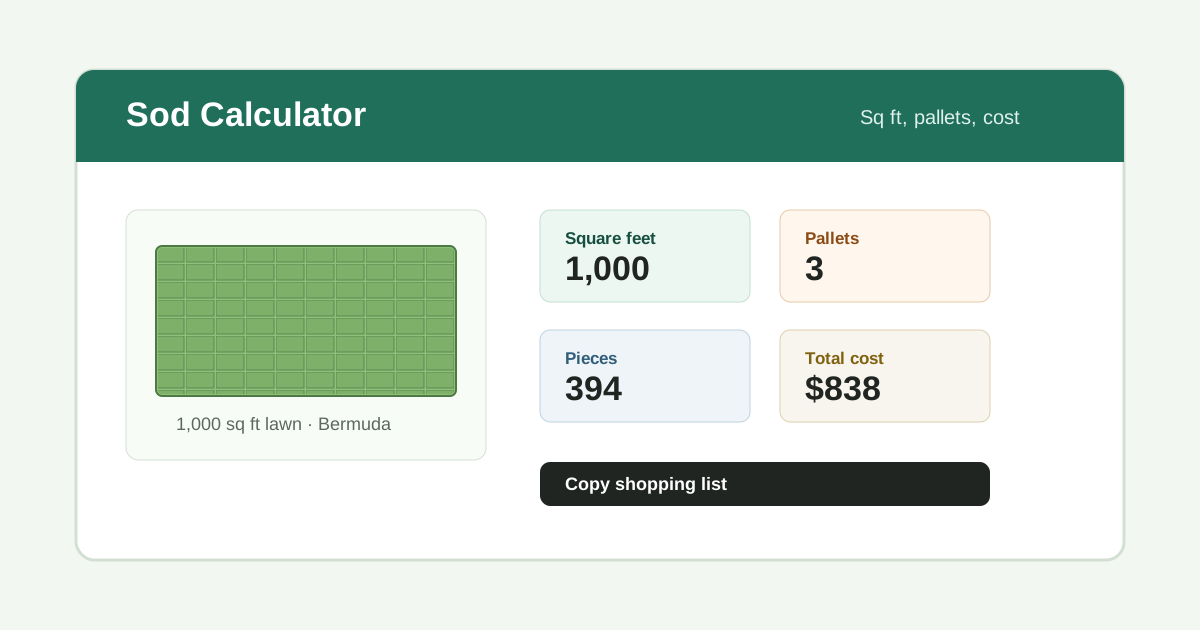
Enter lawn dimensions, choose a slab or roll size, and compare pallet counts with roll counts. Coverage and pallet size vary by region and grower, so use this as a planning estimate and confirm with your supplier.
For irregular lawns, split the area into rectangles and add them, or use the total square feet field.
Pallet coverage varies by region. A common slab pallet covers about 450-500 sq ft; a roll pallet about 500-600 sq ft.
The calculator turns lawn area into net square feet, then divides by slab size to count pieces and by pallet coverage to count pallets, applying waste.
A slab pallet often holds 150 to 170 slabs covering about 450 to 500 sq ft. Big-roll pallets cover about 500 to 600 sq ft. Slab size and pallet coverage vary by grower and region.
Real coverage changes with slab size, pallet packing, slope, edging, and installer. Confirm slab size, pallet coverage, and delivery minimums with your grower.
Multiply lawn length by width for square feet, then add a 5 to 10 percent waste factor for cuts, edges, and fitting. Divide by the pallet coverage to get the number of pallets. This calculator does all of that for any slab or roll size.
A common slab pallet covers about 450 to 500 square feet, while a big-roll pallet covers about 500 to 600 square feet. The exact coverage depends on slab size, how the pallet is stacked, and the grower or region, so this calculator lets you enter your supplier's coverage.
Most slabs are 16 by 24 inches, which is about 2.67 square feet, though some growers cut larger slabs. Rolls vary widely. Enter the actual slab or roll size from your supplier for an accurate piece count.
A 5 percent waste factor covers cuts and curves on a simple rectangular lawn. Use 10 to 15 percent for irregular shapes, slopes, or beds with many edges, since more pieces get trimmed and shaped.
Sod gives an instant lawn and works on slopes and erosion-prone areas, but costs more. Seed is cheaper but takes weeks to establish and needs watering and protection. This estimator focuses on sod; pair it with a cost comparison for your project.
No. It is a planning estimate. Prices, slab size, pallet coverage, delivery fees, soil prep, taxes, and labor vary by grower, region, and site conditions.