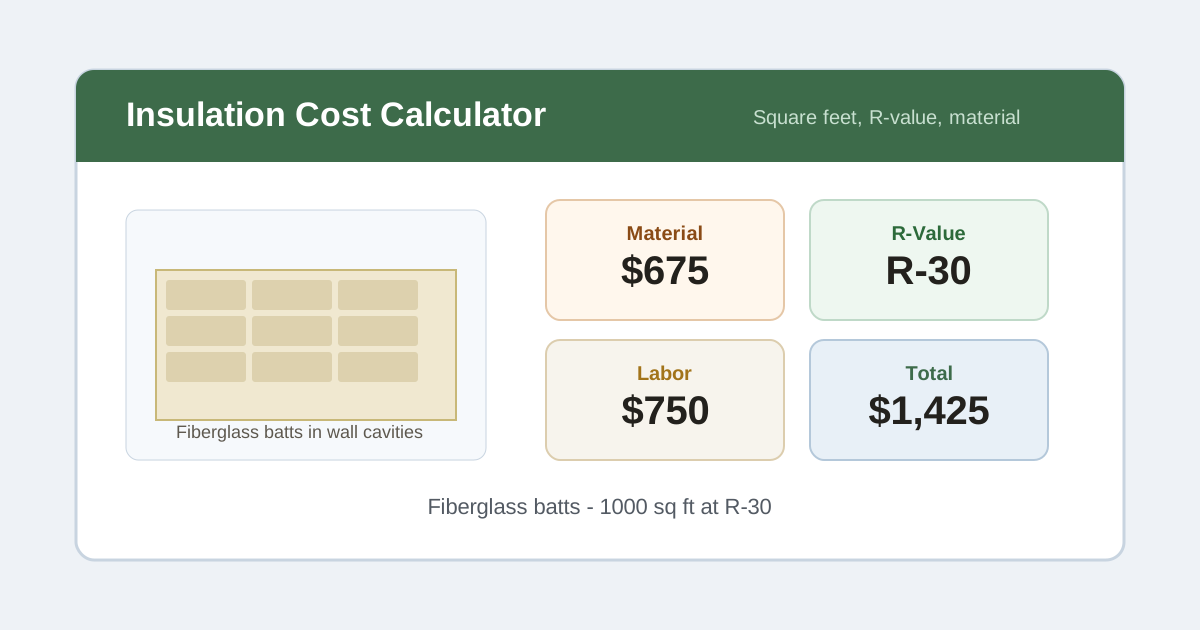
What the calculator estimates
It turns your area, material, target R-value, location, vapor barrier, air sealing, and removal into a planning cost. Fiberglass batts are the most common, blown-in cellulose is for attics, spray foam gives the highest R per inch, and mineral wool is fire-resistant.
How insulation is priced
Insulation cost has two parts: the material itself and the installation labor. Material type, R-value, location (attic is easier than walls), access, vapor barrier, air sealing, removal of old insulation, and local labor all change the per-square-foot price.
Planning note
Insulation pricing changes with material, R-value, access, depth, air sealing, vapor barrier, and local labor. Check for energy rebates and tax credits in your area. Confirm area, R-value, and final quote with your contractor before ordering.
How much does insulation cost per square foot?
Fiberglass batts, the most common choice, run about 0.50 to 1.20 dollars per square foot installed. Blown-in cellulose is 0.70 to 1.50, mineral wool 0.80 to 1.80, and closed-cell spray foam 2.00 to 4.00 dollars per square foot. This calculator lets you set the price per square foot for any material and R-value your contractor quotes.
What R-value do I need for my attic?
The US Department of Energy recommends R-30 to R-49 for most attics, depending on your climate zone. R-30 is the minimum in warm climates, R-38 is common in mixed climates, and R-49 is recommended in cold climates. Higher R-values use more material and cost more.
Is spray foam worth the cost?
Closed-cell spray foam gives the highest R-value per inch (about R-6.5) and also acts as an air barrier and vapor retarder. It costs much more than fiberglass or cellulose but can seal gaps and reduce air leakage. For budgets where cost per R-value matters most, fiberglass and cellulose are cheaper.
Do I need a vapor barrier?
In most climates, a vapor barrier or vapor retarder is recommended on the warm side of the insulation to prevent moisture condensation inside the wall or ceiling cavity. This calculator lets you add a vapor barrier line. Check your local building code for climate-specific requirements.
Are there rebates or tax credits for insulation?
Many utilities and state programs offer rebates or tax credits for upgrading insulation, especially in attics. Check with your utility company and the Database of State Incentives for Renewables and Efficiency (DSIRE) for current programs in your area. This calculator does not include rebates.
Is this a contractor quote?
No. It is a planning estimate. Material, R-value, access, depth, air sealing, vapor barrier, removal, delivery, taxes, and labor vary by contractor, region, and site conditions.