What the calculator estimates
The calculator converts the project dimensions into a rebar layout, then estimates the number of bars, total length, total weight, and a planning cost.
Free reinforcement estimator
Estimate rebar count, spacing, total length, total weight, waste, and cost for slabs, footings, piers, columns, and walls. Use it to plan materials before you order steel or ask a supplier for a quote.
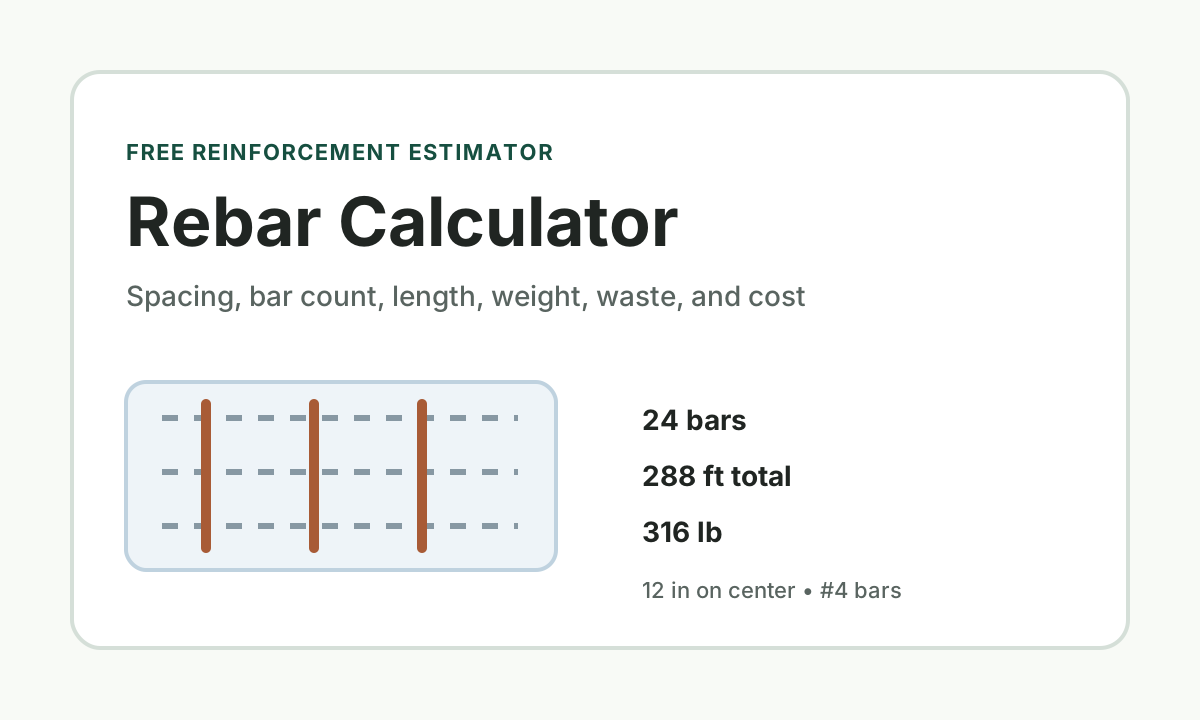
Choose a project type, enter the slab or footing dimensions, and the calculator estimates bar spacing, bar count, total length, total weight, and material cost. Results are planning estimates only and do not replace structural design or local code requirements.
Use slab mode for flat pours, footing mode for continuous runs, pier mode for columns, and wall mode for a vertical pour.
Defaults are editable. Use the same price assumptions you would give a supplier or estimator.
The calculator converts the project dimensions into a rebar layout, then estimates the number of bars, total length, total weight, and a planning cost.
Many DIY slabs start with 12 in on center. Heavier loads, wider spans, and structural details can require tighter spacing or a different reinforcing pattern.
Rebar size, spacing, lap lengths, and placement rules vary by project and local code. Use this as a material estimate, not structural design advice.
It depends on slab size, spacing, bar size, and whether you are using one mat or two. This page estimates material only, so a structural plan should still come from your builder or engineer.
There is no one universal spacing. A common planning starting point is 12 inches on center, but the correct spacing depends on load, slab thickness, soil, and local code.
No. It is a material planning tool. It does not size reinforcement for structural safety, soil conditions, frost depth, or permit requirements.
Yes. The copy and CSV buttons help you share a concise estimate with a supplier, contractor, or project partner.